


 English
 русский
 Español
Automotive components may operate repeatedly throughout a vehicle's service life, making long-term functional consistency an important consideration during product development. An Automobile Solenoid Valve must do more than respond correctly during an initial test. Its electromagnetic and mechanical components need to work together under the operating conditions specified for the application. For automotive parts buyers and engineering teams, understanding how repeated operation affects valve performance can help clarify product requirements and support more informed supplier evaluations.
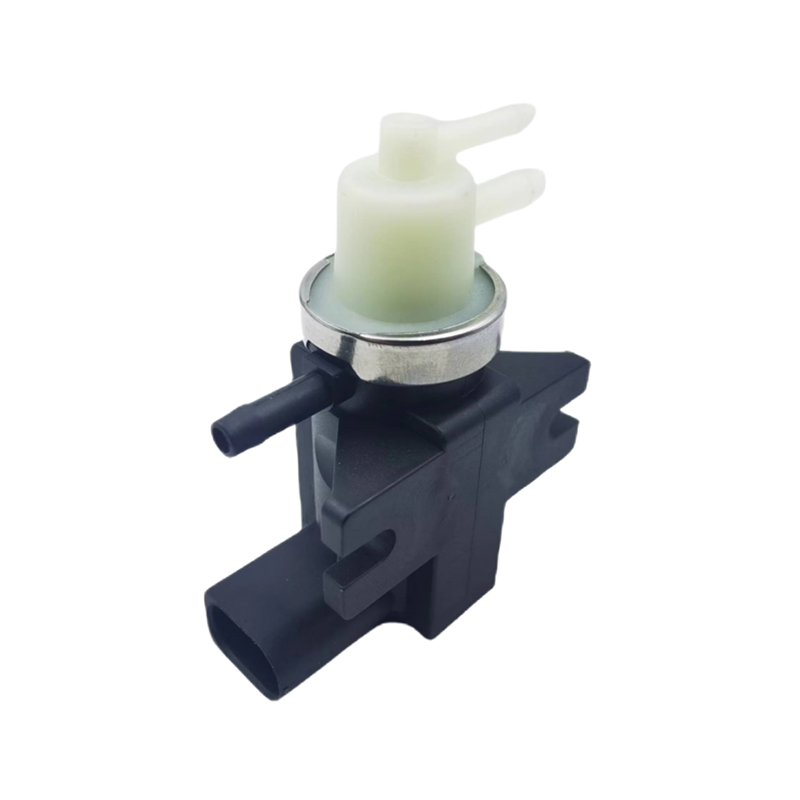
Repeated Actuation Places Demands on Internal Components
A solenoid valve uses electromagnetic force to move an internal component and control a fluid passage. Depending on the application, this action may occur frequently during normal vehicle operation.
Repeated movement places demands on the coil, moving parts, return mechanism, and sealing surfaces. Component geometry, material properties, assembly accuracy, and operating conditions can all influence how the valve behaves over time.
During product development, manufacturers should identify which components experience repeated movement and determine what performance characteristics need to be verified. This creates a more targeted basis for evaluating durability instead of treating the finished valve as a single, uniform component.
Heat Management Deserves Early Attention
Electrical energy supplied to the coil produces magnetic force, but it can also generate heat. The temperature reached during operation depends on factors such as coil design, electrical conditions, activation duration, and the surrounding environment.
Excessive heat relative to the design limits may affect insulation materials or other components. Buyers should therefore confirm the specified voltage, operating conditions, temperature range, and duty requirements for the intended application.
Manufacturers can evaluate coil performance under representative conditions and confirm that the design meets its agreed operating requirements. The goal is not simply to achieve actuation, but to ensure that the component is suitable for the conditions under which it is expected to work.
Sealing Performance Can Change Over Time
Seals help control leakage between internal passages and surrounding components. Their performance depends on material compatibility, compression, surface condition, pressure, and temperature.
Repeated operation and environmental exposure may influence sealing behavior, depending on the valve design and application. Selecting a sealing material based only on initial fit is therefore insufficient when long-term operation matters.
For an Automobile Solenoid Valve, manufacturers should define the relevant fluid and temperature conditions before choosing sealing components. Appropriate leakage checks and durability evaluations can then be incorporated into the validation plan according to the product's technical requirements.
Test Conditions Should Reflect Actual Use
A durability test is most useful when its conditions relate to the intended application. An arbitrary cycle count does not establish suitability for every automotive system because operating frequency, pressure, temperature, electrical input, and fluid conditions may differ.
Manufacturers should establish a test plan based on agreed specifications and clearly document the conditions used. Depending on the valve's function, evaluation may include:
- Repeated actuation under specified electrical conditions
- Functional response before and after cycling
- Leakage checks at defined stages
- Inspection of relevant moving and sealing components
- Review of performance changes during testing
These checks help identify changes that may not be visible during a brief functional test. Test results should be interpreted within the limits of the defined test method.
Manufacturing Consistency Supports Durability
Even a well-designed valve can show inconsistent results if critical components vary between production batches. Coil characteristics, moving-part dimensions, surface finish, and seal installation may all affect how the finished product performs.
Manufacturers should identify critical dimensions and assembly parameters, then establish appropriate inspection and process controls. Final testing can confirm selected product characteristics, while production records help track whether the agreed requirements are being maintained.
For bulk buyers, asking how durability-related characteristics are controlled provides a clearer picture of manufacturing capability than relying on a single approved sample.
Match Service Expectations to the Application
Different automotive systems impose different demands on solenoid valves. A component's expected operating frequency and environmental exposure should therefore inform its design and validation requirements.
Buyers can help by providing available information about duty cycles, fluid conditions, pressure ranges, temperature exposure, and expected operating patterns. The manufacturer can use these details to assess the appropriate materials, structure, and validation approach.
Clear requirements also help avoid unsupported assumptions about service life when comparing products designed for different applications.
Make Durability Part of the Selection Process
An Automobile Solenoid Valve should be assessed through its intended operating conditions, repeated-actuation requirements, heat management, sealing design, and manufacturing controls. For overseas buyers, discussing these factors with the manufacturer before finalizing a specification helps establish realistic validation criteria and reduces uncertainty during product approval. A design supported by application-relevant testing and consistent production controls provides a stronger basis for long-term automotive component supply.
 View More >>
 View More >>
 View More >>
 View More >>
 View More >>
 View More >>
 No. 58, Aimin Road, Tangxia Town, Ruian City, Wenzhou City, Zhejiang, China
 +86-577-66082028
 +86-18966257799

