


 English
 русский
 Español
A vehicle cabin heating system depends heavily on stable coolant circulation and proper thermal regulation. When a heater blows cold air at idle but improves while driving, the issue often points to restricted coolant flow, weak pressure at low RPM, or control limitations within the HVAC system. Core components such as the Electric Heater Control Valve and Auto Heater Control Valve play a key role in regulating hot coolant delivery to the heater core, and their performance directly affects cabin temperature consistency.
Our company focuses on thermal management components and observes this symptom frequently in systems where coolant flow or valve response becomes unstable at low engine speed.
1. Why idle conditions expose heating weakness
At idle, engine speed is low, which reduces water pump output pressure and coolant velocity. This makes heating issues more noticeable.
- Coolant flow weakens at low RPM
- The heater core receives less hot fluid
- The blend of air may shift toward ambient temperature
- System performance appears normal while driving but fails at stoplights
2. Role of Electric Heater Control Valve in heat delivery
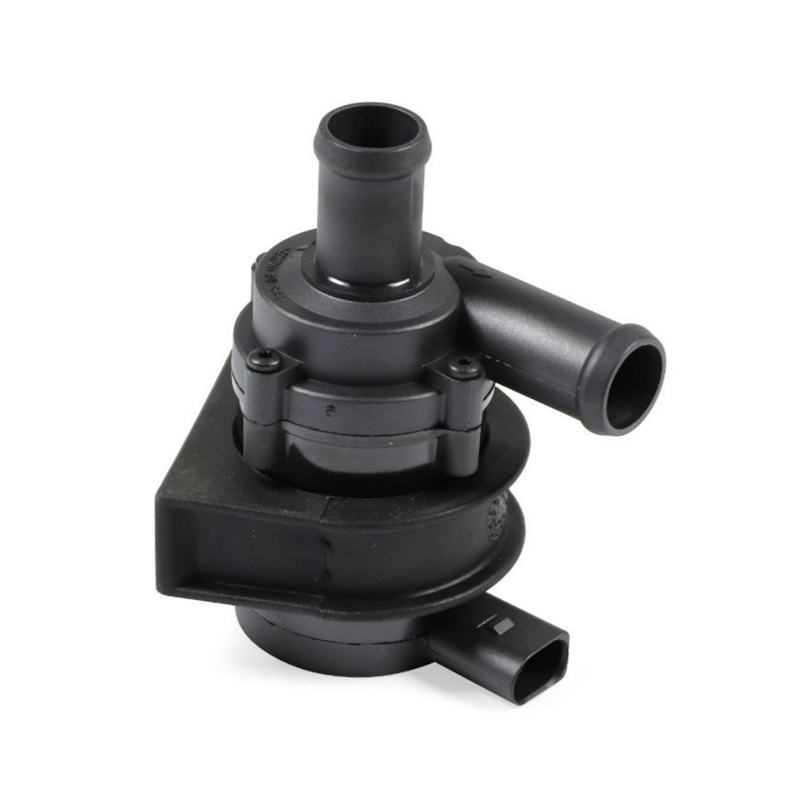
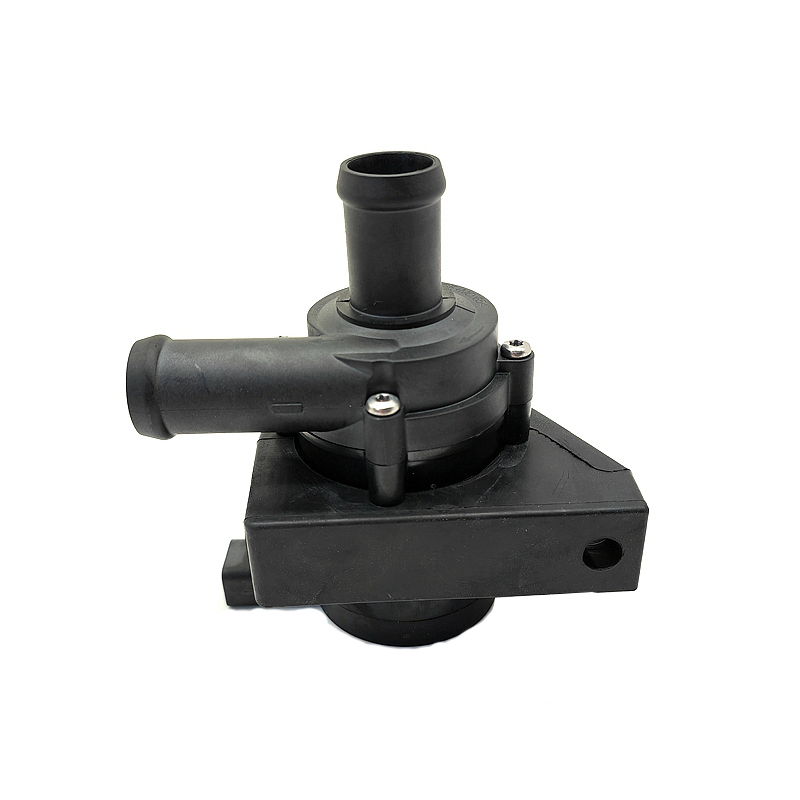
The Electric Heater Control Valve regulates coolant flow into the heater core based on HVAC commands. It is electronically controlled and responds to temperature settings inside the cabin.
Typical technical characteristics:
- Operating voltage: 12V DC
- Response time: 1–3 seconds
- Flow control accuracy: proportional modulation
- Working temperature range: -40°C to 120°C
Valve-related problems often include:
- Partial sticking at low duty cycle
- Delayed opening during idle conditions
- Internal sediment restricting flow passage
- Electrical signal instability from ECU
A partially restricted valve may still function at higher RPM but fail to deliver enough hot coolant at idle.
3. Auto Heater Control Valve behavior under load changes
The Auto Heater Control Valve is designed to automatically adjust coolant distribution depending on engine load and cabin demand.
Observed behavior patterns:
- Opens more effectively at higher engine speed
- Reduces flow when signal input is inconsistent
- May default to partial closed position at idle if calibration is off
Failure symptoms include:
- Cabin heat improves only during acceleration
- Temperature fluctuations during stop-and-go traffic
- Delayed warm-up of cabin air
In many systems, valve response is closely linked with engine coolant pressure, making idle conditions the weakest point.
4. Low coolant circulation efficiency at idle
Cooling system limitations are one of the most common causes.
Key factors:
- Low coolant level reduces system pressure
- Air pockets block heater core channels
- Weak water pump performance at idle speed
When flow is insufficient, heater core cannot transfer enough thermal energy to incoming air, resulting in cold air output.
5. Heater core restriction and sediment buildup
Heater core efficiency decreases over time due to contamination.
Common issues:
- Mineral scale accumulation inside micro channels
- Rust particles reducing flow cross-section
- Partial clogging causing uneven heat distribution
Technical impact:
- Flow resistance increases significantly
- Heat transfer drops under low-pressure conditions
- The system relies on higher RPM to compensate
6. Blend door and airflow mixing errors
Even with proper coolant temperature, air distribution can still fail.
Possible faults:
- Blend door stuck in cold-air position
- Actuator motor timing mismatch
- Incorrect calibration after battery reset
This results in:
- Hot coolant present but cold air delivered
- No change when temperature knob is adjusted
- Inconsistent vent output temperature
7. Water pump efficiency loss at idle
Water pump performance directly affects heater operation.
Symptoms of reduced efficiency:
- Weak coolant circulation at low RPM
- Temperature improves only during driving
- Increased engine thermal imbalance
At idle, pump speed is minimal, so any wear or impeller damage becomes more visible.
8. Diagnostic approach used in system evaluation
We recommend a structured inspection method:
- Check coolant level and system pressure
- Measure heater hose inlet/outlet temperature difference
- Test valve response using electronic actuator scan
- Inspect heater core flow resistance
- Verify blend door movement range
A healthy system should maintain stable outlet temperature even at idle without requiring engine revving.
9. Engineering insight from thermal system design
From a component design perspective:
- Stable idle heating requires balanced flow control and pump efficiency
- Valve response time must remain consistent under low voltage conditions
- Heater core must maintain low resistance flow paths
- HVAC control logic should compensate for idle RPM reduction
System imbalance in any of these areas can lead to cold air output at idle.
Cold air from a heater at idle is usually not a single failure but a combination of flow limitation and control response issues. The Electric Heater Control Valve and Auto Heater Control Valve are critical elements in maintaining stable coolant delivery, especially under low engine speed conditions.
By combining proper coolant maintenance, valve performance testing, and airflow system checks, heating stability can be significantly improved even in demanding idle environments.
 View More >>
 View More >>
 View More >>
 View More >>
 View More >>
 View More >>
 No. 58, Aimin Road, Tangxia Town, Ruian City, Wenzhou City, Zhejiang, China
 +86-577-66082028
 +86-18966257799
