


 English
 русский
 Español
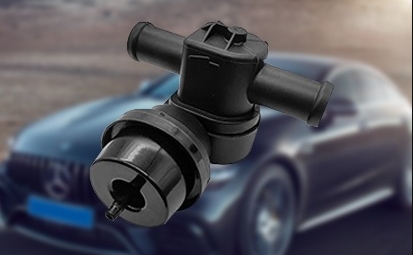
Nothing drains a vehicle owner's patience quite like installing a replacement component only to face the identical problem months later. This scenario plays out frequently with turbocharger systems, where a Turbocharger Solenoid Valve fails, gets replaced, and then fails again. Drivers searching technical forums often express bewilderment: "I replaced the solenoid, so why is the check engine light back with the same code?" This common frustration points to a deeper issue—the replacement part itself may not be the true solution when the root cause lies elsewhere in the system. Understanding the role of the broader Automobile Solenoid Valve network within the engine management system helps explain why these repeat failures occur and what can be done to prevent them.
Understanding the Wastegate Solenoid's Role
The wastegate solenoid valve, often referred to as the turbocharger boost control solenoid, serves as the electronic brain's mechanical hand. When the engine control module determines that boost pressure needs adjustment, it sends signals to this solenoid, which then modulates vacuum or pressure to the wastegate actuator. This actuator physically opens or closes the wastegate flapper, controlling exhaust flow to the turbine wheel.
Proper function requires the solenoid to respond accurately to these electrical commands. The specified resistance typically falls between 27 and 35 ohms at room temperature. When a solenoid tests within this range but still fails to control boost properly, the issue may not reside within the solenoid itself.
Common Reasons for Repeated Solenoid Failure
Underlying Mechanical Issues
A significant number of repeat failures trace back to problems with the wastegate actuator or turbocharger assembly. If the wastegate flapper sticks partially open or closed, the solenoid must work harder than designed to compensate. This constant overexertion eventually damages the internal components.
Users reporting multiple solenoid replacements often discover that testing the wastegate actuator reveals sticking or improper movement. The solenoid, in these cases, becomes the sacrificial component masking a larger mechanical problem.
Vacuum System Leaks
The vacuum lines connecting the intake manifold, solenoid, and actuator frequently deteriorate over time. Small cracks or loose connections introduce unmetered air into the system, confusing the pressure differentials the solenoid relies upon for accurate control .
Diagnostic procedures from multiple manufacturers emphasize inspecting these vacuum lines thoroughly before condemning the solenoid. A solenoid operating with incorrect vacuum supply cannot perform its function correctly, causing performance complaints and eventual failure.
Electrical Connection Problems
Corrosion within the electrical connector presents another hidden culprit. Moisture infiltration creates resistance in the circuit, subjecting the solenoid to voltage drops or spikes that degrade internal windings. What appears as solenoid failure actually stems from poor connectivity at the harness interface.
Professional technicians recommend inspecting connectors for signs of corrosion, bent pins, or loose retention. Cleaning contacts with appropriate electrical cleaner often resolves intermittent issues before they destroy a new solenoid.
Proper Diagnostic Approach
Comprehensive System Evaluation
Rather than immediately replacing a suspected Turbocharger Solenoid Valve, systematic diagnosis prevents repeat failures. Technicians should begin with visual inspection of all related components—vacuum lines, electrical connectors, and the wastegate actuator itself.
Testing should follow a logical progression:
Verify battery voltage and ground circuits at the solenoid connector
Measure solenoid resistance against specifications
Apply vacuum or pressure to test mechanical function
Observe wastegate actuator movement for smooth operation
Check for exhaust leaks near the turbocharger mounting
The Click Test Limitation
Many DIY guides suggest listening for an audible click when activating the solenoid as proof of function. While this indicates some electrical response, it does not confirm proper flow control or response time. A clicking solenoid may still fail to modulate boost correctly due to internal restrictions or weakened springs.
Quality Considerations for Replacement
When replacement becomes necessary, component quality directly influences service life. Wenzhou Xinhao Auto Parts Co., Ltd. manufactures solenoids designed to meet or exceed original equipment specifications, using materials selected for durability underhood. Precision winding of electromagnetic coils ensures consistent resistance values and reliable operation across temperature extremes.
Proper sealing against moisture ingress prevents the internal corrosion that claims many aftermarket solenoids prematurely. Attention to these engineering details extends service life and reduces the likelihood of repeat failures.
Installation better Practices
Even quality components fail early when installation procedures overlook critical steps. Before installing a new Automobile Solenoid Valve in the turbocharger control system:
Clean all mounting surfaces and connection points
Apply dielectric grease to electrical terminals to prevent corrosion
Verify vacuum line routing matches manufacturer diagrams
Secure all connections firmly without over-tightening
Clear diagnostic trouble codes before test driving
Following replacement, a road test under varying load conditions confirms proper operation. Monitoring live data for boost pressure, solenoid duty cycle, and wastegate position provides confidence that the repair addressed the true cause.
Moving Beyond the Parts Cannon Approach
The temptation to throw parts at recurring problems wastes time and money. Documenting symptoms, performing thorough diagnostics, and understanding the complete system operation leads to lasting repairs. Users reporting success after multiple failures typically describe finally discovering a hidden vacuum leak or sticky actuator that earlier diagnoses missed.
Wenzhou Xinhao Auto Parts Co., Ltd. supports technicians and vehicle owners with technical resources and quality components designed for reliable service. Our engineering team understands the demands placed on modern solenoid valves and builds products to meet those challenges.

 View More >>
 View More >>
 View More >>
 View More >>
 View More >>
 View More >>
 No. 58, Aimin Road, Tangxia Town, Ruian City, Wenzhou City, Zhejiang, China
 +86-577-66082028
 +86-18966257799
