


 English
 русский
 Español
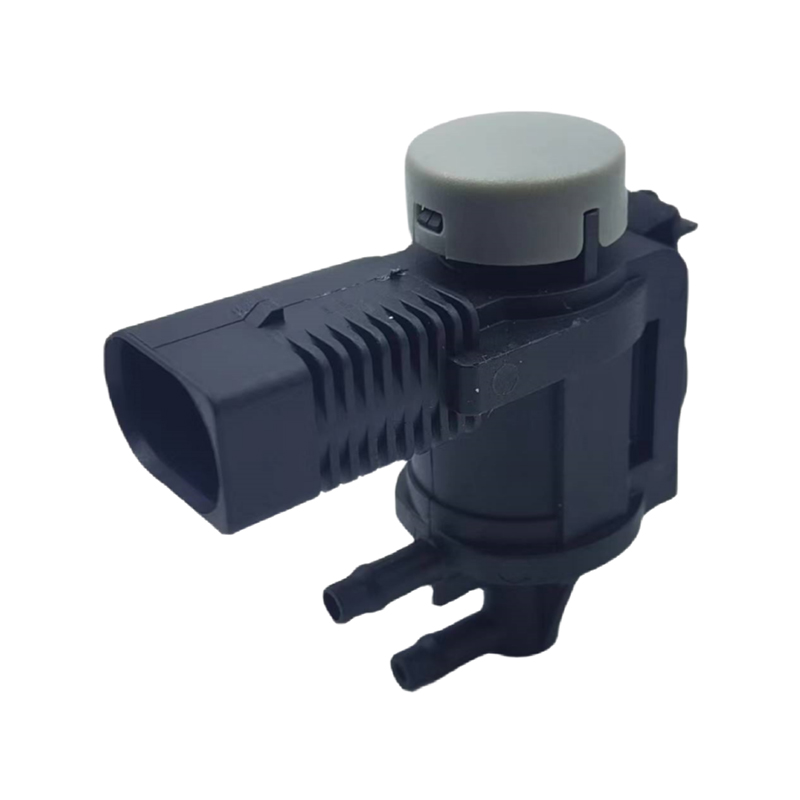
Automotive component buyers need more than a valve that performs well in an initial sample. For distributors, OEM purchasing teams, and engineering departments, the real challenge is maintaining consistent performance across repeated orders and different production batches. Small variations in dimensions, coil assembly, sealing components, or internal movement can affect how a valve operates within its intended system. For an Automobile Solenoid Valve manufacturer, controlling these details throughout production is an important part of delivering components that meet agreed technical requirements.
Design Verification Should Come Before Mass Production
A stable production process begins with a clear product specification. Before manufacturing starts, the valve design should define its intended function, operating conditions, electrical requirements, connection dimensions, and material choices.
These details provide the basis for evaluating whether the design is suitable for its target application. Manufacturers should review critical interfaces and moving components carefully because a design that is difficult to assemble consistently may create unnecessary variation during mass production.
Sample evaluation is also an important stage. Buyers and manufacturers can use it to confirm dimensions, installation compatibility, and agreed performance requirements before approving the product for larger orders.
Control the Components That Affect Performance
An Automobile Solenoid Valve combines electrical and mechanical elements in a compact structure. The coil generates the magnetic force needed for actuation, while the internal moving parts and sealing components help control the intended flow path.
Each component has its own manufacturing requirements. Dimensional variation in moving parts may affect movement, while unsuitable sealing materials can create compatibility problems under certain operating conditions. Coil specifications and assembly quality also influence electrical and actuation performance.
A manufacturer should identify the critical characteristics of each component and establish appropriate inspection criteria. This makes quality control more targeted than relying only on a final visual inspection.
Assembly Accuracy Is More Than Appearance
A finished valve may look correct externally while still containing an assembly issue that affects operation. Component positioning, connection integrity, seal installation, and the movement of internal parts all deserve attention during assembly.
Manufacturing procedures should clearly define the required assembly sequence and the checks needed at important stages. Where practical, inspection points can be incorporated into the production workflow so that potential problems are identified before the valve reaches final testing.
For buyers, understanding how assembly quality is controlled can provide a more useful view of a supplier's manufacturing capability than evaluating appearance alone.
Build Testing Around Defined Requirements
Testing should reflect the valve's intended function and agreed technical specifications. Depending on the product design, relevant checks may include electrical characteristics, actuation behavior, leakage performance, and dimensional conformity.
Manufacturers should define acceptance criteria before production testing begins. Results should be assessed against those criteria rather than relying on subjective judgments about whether a valve appears to operate normally.
A practical inspection plan may cover:
- Incoming component verification
- Critical dimensional checks
- Coil and electrical inspections
- Assembly and movement checks
- Appropriate leakage or functional testing
- Final product identification and inspection records
The specific tests should be selected according to the valve design and customer requirements, rather than applying an identical checklist to every model.
Keep Batch Consistency in Focus
For bulk purchasers, consistency across orders is essential for inventory management, assembly planning, and replacement supply. Changes to materials, components, tooling, or production methods can affect product conformity if they are not properly reviewed.
Manufacturers should maintain controlled specifications and document relevant production changes. Inspection records and clear product identification can also help connect finished components with their production batches.
Before placing repeat orders, buyers may want to clarify how drawing revisions are managed, whether approved samples are retained as references, and how changes are communicated. These arrangements help reduce uncertainty when the same valve is purchased over an extended period.
Customization Requires Clear Technical Communication
Automotive applications can differ in connector configuration, mounting dimensions, electrical requirements, sealing materials, and operating conditions. Customization may therefore involve more than changing the external shape of a component.
Buyers should provide drawings, installation details, operating parameters, and relevant compatibility requirements as early as possible. The manufacturer can then assess the proposed design, identify critical production requirements, and determine what validation is appropriate before mass production.
Clear communication also helps prevent misunderstandings between the approved sample and the final order.
Turn Manufacturing Capability Into Purchasing Confidence
A dependable Automobile Solenoid Valve supply process relies on coordinated design verification, component control, accurate assembly, application-appropriate testing, and disciplined production records. For overseas buyers, reviewing these manufacturing practices helps establish whether a supplier can support both initial orders and ongoing demand. By aligning technical specifications with practical quality controls, manufacturers can provide a clearer basis for product approval, repeat purchasing, and long-term cooperation.
 View More >>
 View More >>
 View More >>
 View More >>
 View More >>
 View More >>
 No. 58, Aimin Road, Tangxia Town, Ruian City, Wenzhou City, Zhejiang, China
 +86-577-66082028
 +86-18966257799
